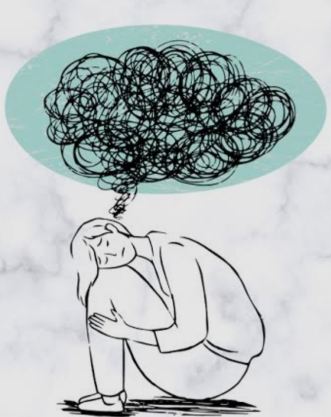
Overthinking is the habit of excessively analyzing or dwelling on situations, past mistakes, or future worries, often creating a mental loop that hinders decision-making and increases anxiety. It manifests as chronic ”what if” scenarios, catastrophizing, and rumination, frequently linked to perfectionism or stress.
People overthink as a misguided attempt to gain control, predict outcomes, and feel safe in uncertain situations. It is often driven by anxiety, perfectionism, or past trauma, causing the brain to loop through potential problems to avoid failure or pain. This habit often focuses on future ”what ifs” or analyzing past mistakes.
”Overthinking is just paralyzing your potential.”
What is Overthinking?
Overthinking is when you dwell on or worry about the same thing repeatedly. Overthinking can be caused by depression, anxiety, and other mental health disorders. It can also contribute to these mental health conditions.
When faced with a major decision-such as choosing a university, switching careers, or getting married or divorced-most people think long and hard about all the potential outcomes. This makes a lot of sense. A major life changes requires thoughtful consideration.
But sometimes you might find it hard to stop turning certain thoughts over and over in your mind. You may dwell on every tiny choice and think about what-ifs so much that you become frozen with inaction. Experts call this overthinking.
Thinking is a productive process that solves problems, plans, and leads to action, while overthinking is repetitive, fear-based rumination that causes anxiety and results in inaction. Thinking brings clarity and calm; overthinking brings confusion, distress, and a scattered, frantic feeling.
Thinking leads to decisions and action. while overthinking is a vicious cycle that paralyzes decision-making, leading to stagnation. Productive thinking is focused on finding solutions or understanding a topic deeper. Overthinking is replaying the same scenarios (often negative) without moving forward.
Why do we overthink so much?
People overthink as a misguided attempt to gain control, predict outcomes, and feel safe in uncertain situations. It is often driven by anxiety, perfectionism, or past trauma, causing the brain to loop through potential problems to avoid failure or pain. This habit often focuses on future ”what ifs” or analyzing past mistakes.
There are some key reasons for overthinking:
- Fear of Failure: A desire to avoid mistakes causes individuals to obsessively dwell on decisions to ensure they are ”perfect” often leading to analysis paralysis.
- Past Experiences: Replaying past, negative situations in a, ”I should have done this,” loop (rumination) often links to anxiety or low mood.
- Take stress & anxiety: Anxiety tricks the brain into perceiving non-dangerous situations as threats, keeping the mind on high alert and analyzing potential, usually negative, scenarios.
- Perfectionism: Perfectionism drives overthinking by creating a fear-based loop where the need for flawless results causes paralysis, anxiety, and excessive analysis, ultimately hindering action and productivity. It stems from a desire to avoid mistakes or failure, often leading to ”perfectionary paralysis” or procrastination.
Signs you are overthinking
Overthinking involves chronic mental exhaustion from excessive worry, constant self-criticism, and an inability to relax. Key signs include replaying past events, fearing the future, struggling with simple decisions, and seeking constant reassurance. This mental loop often leads to anxiety, perfectionism, and paralysis, where thinking prevents action.
Here are some mental & Emotional Signs:
- Difficulty focusing: You find it hard to concentrate on the present because your mind is stuck on past or future scenarios.
- Constant Self-Criticism: you are hyper-critical of your actions and decisions.
- Inability to Relax: Even during downtime, your mind is racing, planning, or worrying, leaving you feeling mentally exhausted.
- Worst-Case Scenarios: you frequently obsess over hypothetical negative outcomes, even without evidence.
- Constant Ruminating: you cannot stop replaying past conversations, mistakes, or embarrassing moments.
How overthinking is destroying your life
Overthinking destroys your life by trapping you in a cycle of anxiety, mental exhaustion, and inaction. It transforms minor worries into major stressors, causing physical fatigue, insomnia, and strained relationships while paralyzing you from seizing opportunities or making decisions. It shifts your focus from living in the present to replaying the past or catastrophizing the future.
Overthinking causes missed opportunities by inducing fear-based inaction, leading to analysis paralysis where potential, not action, is wasted. It stems from perfectionism and catastrophizing, transforming manageable decisions into insurmountable obstacles. To overcome this, set time limits for decisions, focus on taking small actions, and embrace imperfection.
Yes, overthinking (”rumination”) severely disrupts mental peace by trapping you in a cycle of worry, negative emotions, and irrational scenarios, often causing anxiety, fatigue, and insomnia. It is essentially a thief of joy, eroding confidence and causing emotional paralysis that prevents you from enjoying the present moment.
How to stop overthinking
Stopping overthinking requires immediate action to break the mental loop, switching from circular thinking to directional, productive movement. Shift your energy instantly by walking, stretching, or dancing to pause racing thoughts.
Set a timer for 5 minutes and focus entirely on one small, actionable task. Use belly breathing or pranayama to calm your nervous system. Step outside, change rooms, or tidy your immediate surroundings to break the cycle.
Setting small, strict limits on decision-making is a powerful way to break the cycle of overthinking, often referred to as ”analysis paralysis.” By imposing constraints, you reduce cognitive load and force action over perfection.
To manage overthinking, focus on what you can control: your immediate actions, responses, and present-moment awareness. shift from ”what if” to ”what is” by setting a ”worry window,” taking small actions, practicing mindfulness (5-4-3-2-1 technique), and accepting that you cannot control outcomes, only your efforts.
To stay busy and manage overthinking, break the cycle by shifting from rumination to action through small, immediate, and tangible tasks. Effective strategies include setting a dedicated ”worry window,” using timers to force decisions, practicing physical tasks to engage the brain, and focusing on present, sensory-driven activities rather than past or future scenarios.
How to start taking action in life
To start taking action and overcome overthinking, immediately shift from analysis to action by taking one small, manageable step. Challenge ”what if” thoughts with positive possibilities, set strict time limits for decisions, and label overthinking as it happens to break the thought cycle. Action breeds confidence and overcomes paralysis.
The 1% rule for overthinking is a strategy of consistent, tiny actions that compound over time, aiming to break the paralysis of analysis by doing just 1% more action and 1% less worrying each day. It focuses on lowering the barrier to entry for tasks, moving from ”perfect planning” to ”imperfect action” to stop the cycle of overthinking.
Waiting for the ”perfect time” is a form of procrastination born from overthinking; the ideal moment is an illusion. Instead, take messy action now using available resources, as progress stems from consistency and learning, not perfect conditions. Actions leads to results; excessive planning keeps you stuck.
Building a ”discipline bot” persona-an automated, emotionless, action-oriented mental framework-sis a highly effective way to bypass the emotional paralysis of overthinking. Overthinking often stems from waiting for the ”perfect” moment, which discipline replaces with automated action.
To learn by doing and break the overthinking cycle, shift from analysis to action by setting strict time limits for decisions, engaging in immediate physical activity, and practicing mindfulness to acknowledge-not dwell on-thoughts. Replace ”what ifs” with small, tangible steps, allowing experience to provide the data you’re trying to overthink.
Daily habits to reduce overthinking
To reduce overthinking, establish daily habits like meditating to stay present, journalising to process anxious thoughts, scheduling a ”worry time,” and practicing mindfulness. other effective habits include exercising to release stress, focusing on control, using ”5-4-3-2-1” grounding, and taking breaks from technology.
Daily habits to reduce overthinking:
- Exercise/Walk: Daily exercise reduces overthinking by releasing endorphins (natural mood lifters), lowering stress hormones like cortisol, and acting as a mental distraction from ruminating thoughts. Consistent movement, such as walking, yoga, or dancing, helps shift focus from negative thoughts to the present moment, lowering anxiety.
- Meditation/Mindfulness: Mindfulness meditation reduces overthinking by training the brain to observe thoughts without judgment, breaking the cycle of rumination, and anchoring attention in the present moment. By practicing daily for 10 minutes, focusing on breath or bodily sensations, you can calm mental space.
- Limit Social Media: Limiting social media to under 30 minutes daily reduces overthinking, anxiety, and FOMO (fear of missing out) by decreasing information overload and comparison. Effective strategies include setting app time limits, disabling notifications, and removing apps from the home screen to stop mindless scrolling.
- Good sleep routine: Yes, establishing a consistent, calming good sleep routine is one of the most effective ways to reduce overthinking and ”racing thoughts” at night. By preparing your mind and body for rest, you switch off the day’s stress and lower cortisol levels, allowing for a more peaceful, less analytical state of mind.
Real-Life Example/Story
Wayne has been experiencing anxiety, depression and OCD (obsessive compulsive disorder) for the last 15 years. After using mental health services, opening up to his support network and exercising more regularly, he has been able to enjoy life despite his illness.
I’m 34 years old have been living with anxiety, depression and OCD for the past 15 years now. At the start of my journey, I didn’t really understand the whole mental health subject. I’ve always tried to look back to see when my mental health issues started and I’m sure they started in secondary school. But the thought process didn’t really come to the base of my life until I was 21.
It felt like I had so many thoughts- goods ones and bad-but I had no way to express them and I couldn’t handle it all at once. So, I just tried to block it out as much as I could but with time, the thoughts got worse and I got to a place where I needed to see advice.
After taking advice from doctor, he said that, you really need to sort-out many few things.
After a lot of soul searching, I’m finally feeling positive about life. I’m currently attending a well-being group once a month which I’m enjoying and where I’m meeting new people. I also started to eat more healthily about 21 months ago.
I look after myself better, go to the gym once or twice a month and exercise at home which includes boxing, hand weights, kettle bells and using my very own exercise bike. I have fallen in love with it. It has been truly amazing for my mental health and I have witnessed the rewards from all of my hard work.
I’m enjoying life again and sleeping so much better at night. A good night’s sleep is so important for our minds. When I’ve finished my workouts, I feel so refreshed afterwards, ready and positive for the day ahead. I run a few miles on wednesdays and go walking with my family members, to get each other out and into the fresh air. Spending time with my family is so important to me.
Conclusion
Overthinking is an unproductive cycle of ruminating on past mistakes or future worries, often rooted in a desire for control or perfectionism. It acts as a mental trap causing stress, decision paralysis, and fatigue. Overcoming it requires identifying triggers, practicing mindfulness, and taking action, transforming the habit into healthier mental habits.
Overthinking rarely leads to solutions; rather, it creates a loop of uncertainity that causes a loop of uncertainity that causes physical and mental exhaustion, including sleep disturbances and anxiety. Shifting from constant analysis to taking small, concrete actions reduces anxiety and helps regain mental clarity.
Identifying personal triggers helps stop the spiral before it becomes overwhelming. Chronic overthinking that impacts daily life m,ay require professional help.
overthinking might feel like an endless cycle, but research proves it can be managed effectively through proper understanding and targeted strategies. Above all, early recognising overthinking patterns helps prevent their escalation into serious mental health challenges.
Breaking free from overthinking requires dedication and patience. Simple steps like journalising, scheduled worry time, and breathing exercises create powerful changes when practised regularly. Combined with doctor support when needed, these techniques help transform negative thoughts patterns into healthier mental habits.
FAQ Section
How to stop overthinking instantly?
To stop overthinking instantly, engage in a sensory distraction like 4-7-8 deep breathing, splashing cold water on your face, or using the ”5-4-3-2-1” technique to ground yourself in the present. Immediately interrupt the thought cycle by labelling the thought (”this is a worry”) and focusing on a small, physical action to shift your attention away.
Is overthinking a mental illness?
Overthinking is not classified as a mental illness on its own, but it is a common symptom of underlying conditions like generalized anxiety disorder, depression, or obsessive-compulsive disorder (OCD). while a frequent human experience, chronic, disruptive overthinking (rumination) can lead to severe stress, insomnia, and decreased quality of life, requiring professional treatment.
Can overthinking be controlled?
Yes, overthinking can be controlled and managed through conscious mental training, behavioral changes, and mindfulness techniques. Key strategies include identifying, labeling, and questioning negative thoughts, setting dedicated time for worry, practicing deep breathing, and refocusing on the present moment to break the cycle of rumination.
Hoiw to train your mind to take action?
To train your mind to take action, cultivate a bias for action by setting small, clear goals, pairing tasks with rewards to release dopamine, and utilizing techniques like the 5-second rule to overcome hesitation. Overcome inaction by acknowledging fears, practicing self-awareness to recognize procrastination, and intentionally shifting focus from negative thought patterns to immediate, physical steps.
How does overthinking develop?
Overthinking typically starts when the brain’s threat-detection system (amygdala) misinterprets stress, uncertainity, or past failures as dangers, triggering a, ”what if” cycle. It often stems from anxiety, perfectionism, or a desire for control, causing the mind to ruminate on the past or catastrophize the future.