Introduction
Seo for beginners is a really great starting point, when he understands the three stages of search engines to find, crawl, and understand, while providing valuable content to users. some actions considered are search relevant keywords, optimizing title tags and meta descriptions, maintaining a speed of site loading times, improving site structure, and building quality backlinks.
Key Seo Components for Beginners
- Keyword Research: Identify search terms your audience uses, focusing on a high-volume, low seo difficulty keywords & used specific (long-tail) keywords using tools like Uber suggest, Google keyword planner & Ahrefs.
- On-page Seo: Place keywords naturally in titles, headers (H1, H2), and throughout content. keep title tags under 60 characters and meta descriptions under 160 characters.
- Content Quality: Create high-quality, relevant, and comprehensive content that answers user intent (what users are actually searching for).
- Technical Seo: Ensure the websites loads quickly, is mobile-friendly, and has a clear structure.
- Off-Page Seo: Build authority by obtaining backlinks from reputable, relevant websites.
- Using Tools: Use tools like Google Search Console to understand how Google sees your page, and Google Analytics to track performance.
SEO remains one of the most reliable growth channels for businesses in 2026. It influences how brands are found, evaluated, and chosen across search engines and AI-driven discovery platforms. Beginners can easily learn seo through various platforms, Demand of Search engines are rapidly increases in nowadays & it can provides long-term growth as well as short-term benefits.
Search engines operate by constantly scanning the internet to find, organize, and rank content using three primary steps: Crawling, Indexing, and Ranking. Automated software known as crawlers or spiders browse websites to discover content, which is then stored and organized in a massive index database. Finally, algorithms rank the most relevant results for a user’s query based on hundreds of factors like keywords, authority, and quality.
Types of SEO you must know
On-Page SEO
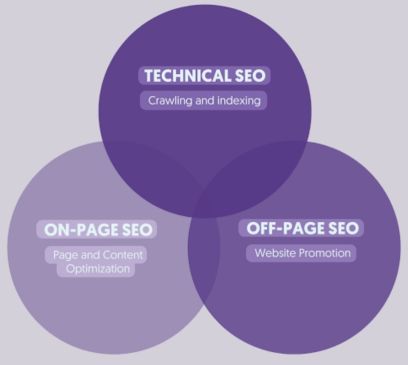
On-Page SEO is the practice of optimizing individual web pages to rank higher and earn more relevant traffic, covering content, HTML elements (title tags, meta descriptions), and site structure. It focuses on enhancing user experience and providing clear, high-quality, and keyword-relevant content to search engines, all of which are directly under your control.
Off-Page SEO
Off-Page SEO refers to actions taken outside your own website to impact your rankings within search engine results pages (SERPs). It builds website credibility, authority, and trust through strategies like high-quality backlink acquisition, social media marketing, guest blogging, and brand mentions.
Technical SEO
Technical SEO involves optimizing a website’s infrastructure-non-content elements-to improve crawling, indexing, and rendering by search engines, leading to higher rankings. Key areas include improving site speed, ensuring mobile-friendliness, implementing structured data, secure connections (HTTPS), and fixing crawl errors to enhance visibility.
Keyword Research (Foundation of SEO)
Keyword research is the essential foundation of SEO, involving the identification of search terms users employ to find products, services, or information. It bridges the gap between consumer intent and content strategy, allowing businesses to create relevant content that ranks higher, drives targeted traffic, and improves conversion rates.
Finding low-competition keywords involves targeting long-tail phrases (3+ words) with specific user intent, often having a search difficulty score below 30. Utilize tools like Google keyword planner, SEMrush, Ahrefs, or AnswerThePublic to find niche terms, then filter by high CPC (indicating value) and low difficulty. Focus on ”people Also Ask” sections to find content gaps.
The best free keyword research tools are Google Keyword Planner (best for PPC and search volume), AnswerSocrates (best for content ideas), and Ahrefs Keyword Generator (best for keyword diificulty). These tools provide essential search volume data, competition levels, and long-tail keyword suggestions to build an effective content strategy without cost.
ON-PAGE SEO OPTIMISATION
On-Page optimization is the process of updating a website’s content, HTML tags (titles, meta descriptions, headers), and structure to improve search rankings and user experience. key actions include keyword targeting in the title, URL, and first 100 words, optimizing image alt text, and ensuring high-quality, relevant content that satisfies search intent.
Key On-Page SEO Elements
- Title Tag: Include the target keyword near the beginning and keep it under 70 characters.
- Headings (H1, H2): Use one H1 tag containing the keyword, and use H2/H3 tags for subtopics using related keywords.
- Content-Quality: Focus on searcher intent-what users are actually looking for, Include relevant LSI (Latent Semantic Indexing) keywords.
- URL Structure: Keep URLs short descriptive, and contain the target keyword (e.g., site.com/on-page-seo-guide).
- Meta Description: Write compelling summaries (under 160 chars) with the keyword to boost click-through-rates.
- Image Alt Text: Describe images using relevant keywords, aiding both SEO and accessibility.
- Internal Linking: Link to other relevant pages on your site to establish authority and help navigation.
Create High-Quality Content
SEO-friendly content is material designed to rank highly on search engines while satisfying user intent, combining strategic keyword placement, high-quality information, and clear structure. It aims to increase visibility, drive organic traffic, and engage readers through, for example, readable, authoritative, and well-structured, original content.
To Write engaging blog posts, focus on understanding your audience, crafting compelling headlines, using a conversational tone, and formatting for readability with short paragraphs, subheadings, and visuals. Incorporate storytelling, actionable advice, and clear call to action (CTSs) to keep readers hooked and encourage interaction.
Aim for an average of 15-20 words per sentence. Long sentences (40+ words) drastically reduce comprehension. Keep paragraphs to 3-4 sentences maximum. Walls of text are intimidating, particularly on mobile devices. Active voice is more direct, engaging, and usually shorter than passive voice (e.g., ”The cat chased the mouse” vs. ”The mouse was chased by the cat”).
Technical SEO Basics
Website speed optimization improves user experience, boosts SEO, and increases conversions. key techniques include compressing images, minifying CSS/JS, enabling browser caching, using a Content Delivery Network (CDN), and reducing server response times. Aim for a Largest Contentful Paint (LCP) of <_ 2.5 seconds for optimal performance.
A mobile-friendly website uses responsive design to adapt seamlessly to smaller screens, providing readable text without zooming, intuitive navigation, fast loading speeds, and easy-to-click buttons. Ley practices include using a hamburger menu, optimizing images, eliminating pop-ups, and prioritizing thumb-friendly interaction.
HTTPS (Hyper Text Transfer Protocol Secure) is the secure version of HTTP, using SSL/TLS protocols to encrypt data between a user’s browser and a website. It ensures data integrity and confidentially, protecting sensitive information like passwords and credit card details. Websites with HTTPS display a padlock icon, increasing trust and boosting SEO rankings.
OFF-PAGE SEO & BACKLINKS
Backlinks (or incoming links) are clickable hyperlinks from other websites that point to your site. They act as ”votes of confidence” or trust signals, indicating to search engines that your content is valuable, which improves your rankings and authority. High-quality backlinks come from reputable, relevant sites, boosting SEO performance.
To get high-quality backlinks, create exceptional, link-worthy content-such as original research, data-driven studies, or free tools-that others naturally want to cite. Combine this with active, personalized outreach to industry peers, guest posting on reputable sites, fixing broken links, and appearing on podcasts.
A successful social media sharing strategy involves creating scroll-stopping, audience-centric content that balances education, engagement, and promotion (e.g., 50/30/20 rule0. key elements include setting SMART goals (like brand awareness or leads), selecting relevant platforms based on audience demographics, maintaining a consistent brand voice, and utilizing analytics to optimize performance.
Track & Improve SEO Performance
Google Analytics (GA4) uses a JavaScript tracking code and first-party cookies to track website/app traffic, user behaviour, and conversions. It helps businesses identify where visitors come from, how they navigate pages, and which marketing efforts generate the most revenue, utilizing machine learning for predictive insights and data modeling.
Google Search Console is a free tool by Google that helps website owners, marketers, and developers monitor, maintain, and troubleshoot their site’s presence in Google Search results. It provides data on search performance (clicks, impressions, rankings), helps manage site indexing, and alerts users to technical issues, security hacks, or spam, as explained in this Wikipedia article and this YouTube video.
Monitoring search engine rankings involves tracking keyword positions, click-through rates (CTR), and visibility changes over time using tools like Google Search Console, SEMrush, or Ahrefs. key strategies include tracking targeted keywords, monitoring competitor rankings, and reviewing performance data to adjust strategies.
Common & SEO Mistakes to Avoid
Keyword stuffing is an outdated SEO mistake involving the excessive, unnatural repetition of keywords, which severely harms rankings, readability, and user experience. It violates Google’s spam policies, often resulting in penalties or de-indexing. Modern SEO requires natural language, prioritizing user intent over keyword density.
Duplicate content refers to identical or substantially similar content appearing on the internet across multiple URLs, either within the same website (internal) or on different domains (external). While not typically resulting in a manual penalty, it harms SEO by confusing search engines regarding which version to rank, diluting link authority, and wasting crawl budget.
Ignoring mobile optimization creates a disastrous user experience, with 57% of visitors leaving sites that are not mobile-friendly. It severely damages SEO rankings, reduces conversion rates, and hurts brand reputation. With over 60% of web traffic coming from phones, a non-optimized site is effectively invisible to most users and drives them to competitors.
Final Tips to Rank #1 on Google
Consistency is critical for achieving and maintaining a #1 ranking on Google, as it builds authority, trust, and relevance over time. It involves continuously producing high-quality content, regularly updating existing pages, maintaining technical SEO, and consistently earning backlinks. Google rewards active, reliable sites, making sustained effort essential.
Focusing on user experience (UX) in SEO involves optimizing a site for speed, mobile-friendliness, and intuitive navigation to improve engagement metrics like dwell time and lower bounce rates. Google uses these signals to measure site quality, meaning high-quality content, clear structure, and accessibility directly boost rankings and search visibility.
Regularly updating content is a crucial SEO strategy that boosts traffic, maintains relevance, and improves user engagement. Effective updates involve refreshing old posts, updating data and statistics, and adding new insights based on search intent, often prioritized by analyzing declining traffic in Google Search Console.
Conclusion
SEO for beginners is an ongoing, long-term process focused on improving website visibility and driving organic, free traffic by offering value to users, not just search engines. Key takeaways include optimizing for user intent, creating high-quality content, ensuring mobile-friendliness, and building reputable backlinks.
Focusing on creating original, high-quality, and relevant content that answers searcher queries. Focus on on-page SEO (keywords, titles, meta descriptions), technical SEO (speed, navigation), and building backlinks. SEO is not an instant solution; it takes months to see significant results, but those results are long-lasting.
Structure your site to be user-friendly and mobile-friendly, as Google rewards good user experience. SEO is always changing, so keep learning about industry trends and algorithm updates.
FAQ Section
What is SEO in simple words?
Search Engine Optimisation (SEO) is the process of improving your websites to rank higher in search results (like Google) to attract more free, organic traffic. It involves creating quality content, optimizing technical site performance, and earning links to build authority.
How long does SEO take to show results?
SEO typically takes three to six months to show initial, measurable results, with significant improvements often taking 6-12 months. While minor rankings boosts can appear sooner, meaningful growth in organic traffic and conversions is a long-term process. Results are rarely instant and depend heavily on competition, website authority, and consistency.
Is SEO Free or Paid?
SEO is essentially free in that you don’t pay search engines for organic clicks, but it requires a paid investment of time, resources, or expert services to be effective. While you can do SEO yourself for free, many businesses pay for tools, content creation, or consultants to achieve faster, better results.
How can I rank my website faster?
To rank your website faster, focus on creating high-quality, targeted content that answers specific user questions while building authority through backlinks and technical optimization. Target low-competition keywords, use clear headings (H1-H3), optimize for mobile, and improve page loading speed to increase visibility.
Which tools are best for SEO Beginners?
The best SEO tools for beginners are primarily free, essential, and user-friendly, including Google Search Console (site health), Google Analytics (traffic analysis), and Google Keyword Planner. for keyword research and content optimization, tools like Ubersuggest, AnswerThePublic, and Moz are ideal for beginners, alongside the Yoast SEO plugin for WordPress.